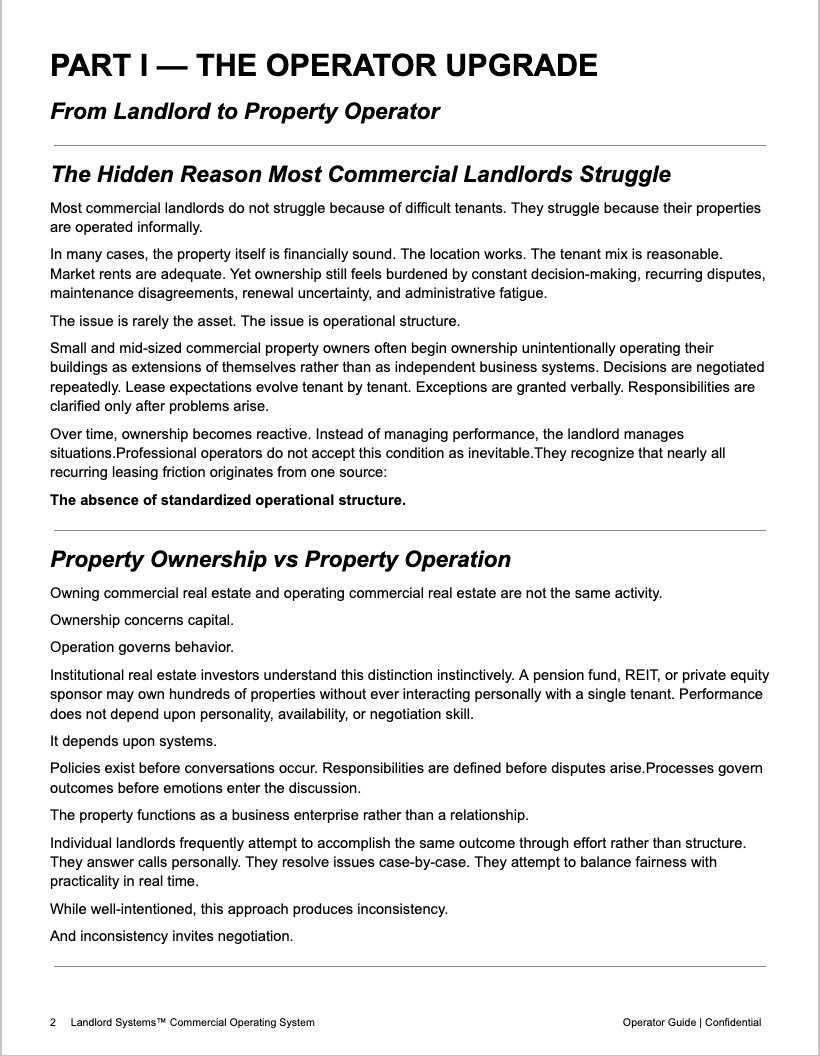
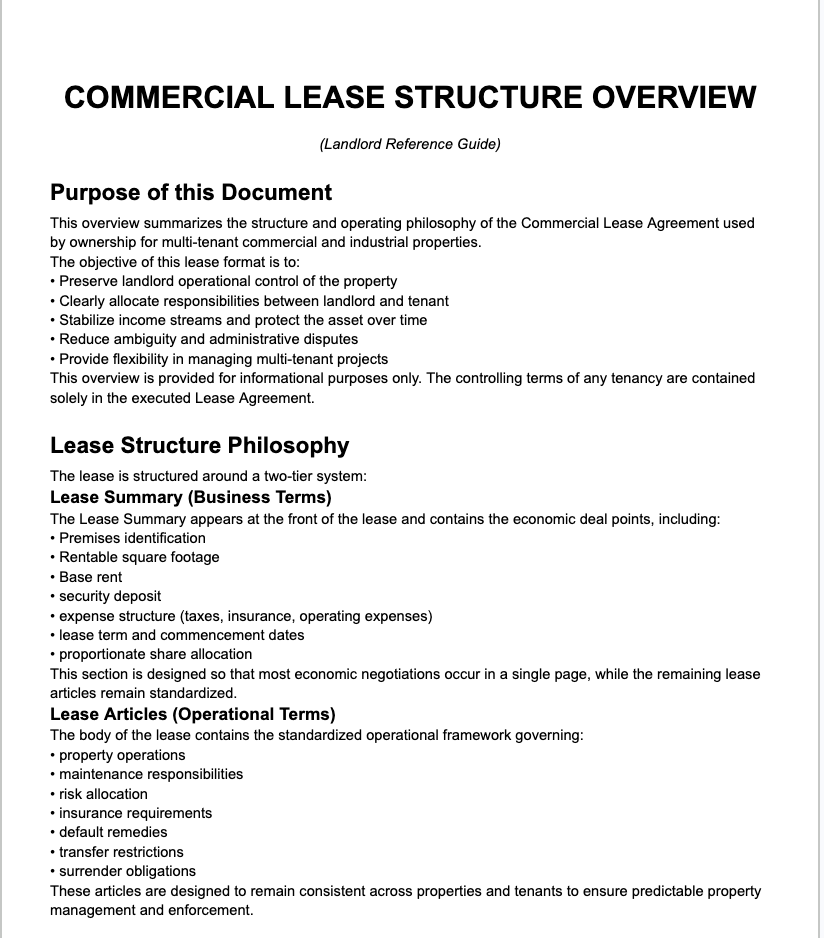
Most landlords do not lose money from one dramatic event. They lose it through weak structure: HVAC contributions that should not be theirs, expense disputes that keep reopening, soft renewal handling, and the same lease decisions being made over and over again. This package is built to fix those problems at the source.
A commercial lease system built to standardize responsibilities, reduce recurring disputes, and give you a stronger operational framework across future leases.
Best fit for small commercial landlords, especially flex, light industrial, and multi-tenant operator portfolios.
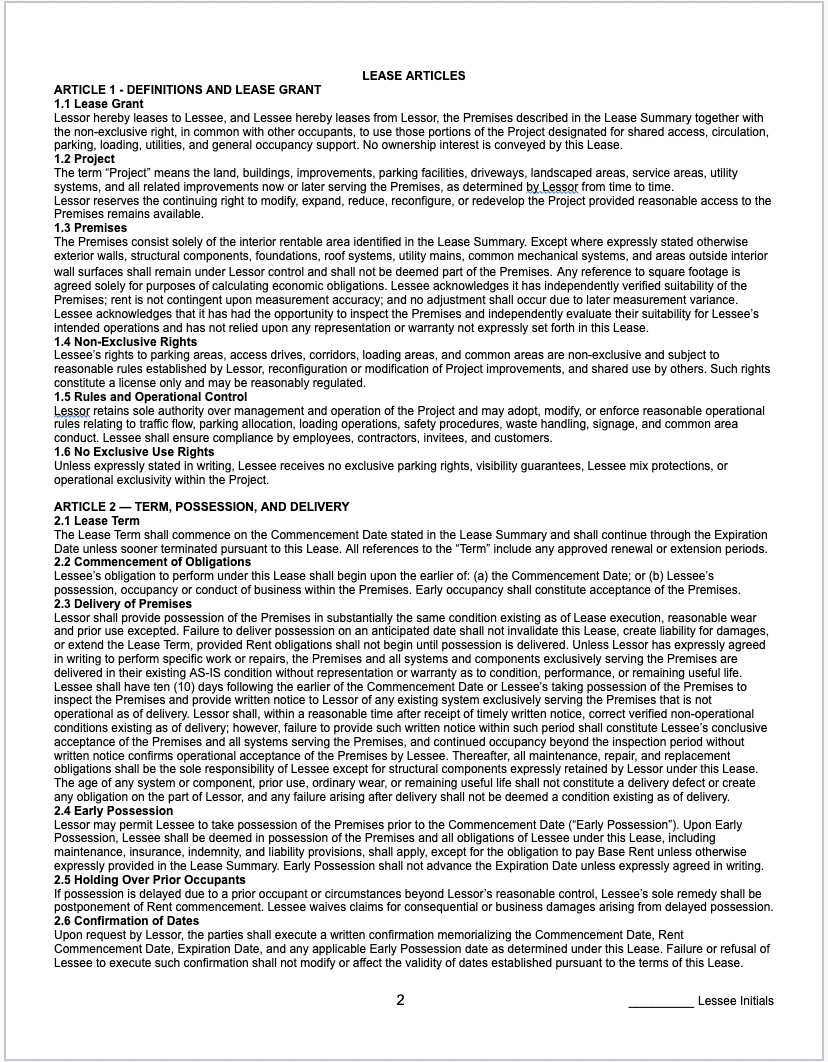
Most forms sound fine until the real-world pressure shows up. That is when vague responsibility turns into owner contribution, loose expense language turns into recurring pushback, and weak renewal structure turns into lost leverage.
The value is not just clause language. The value is reducing repeat decisions, reducing preventable cost drift, and making the property easier to operate consistently across future deals.
Most landlords do not lose money from one dramatic mistake. They lose it the same way, over and over:
This system does not need to be perfect to justify itself. If it prevents one HVAC contribution, one weak renewal outcome, or one drawn-out cleanup cycle, it has already paid for itself.
This system was not written in isolation. It comes from managing real commercial properties, seeing the same issues repeat, and tightening the structure to remove them:
The goal is not to create a perfect lease in the abstract. The goal is to create a system that reduces repeat problems and makes the property easier to operate over time.
A practical package for landlords who want a stronger commercial lease starting point and a more standardized operator approach.
Core lease structure designed around clearer obligations, better consistency, and operator-grade standards.
Explains how the structure works, where landlords get burned, and why certain responsibilities are framed the way they are.
A cleaner way to review the system before using it across future tenants and properties.
The guides are there to show how the structure handles the places landlords usually lose money: HVAC, CAM, renewals, and repeat operational drift.
| Generic commercial lease form | Landlord Systems package |
|---|---|
| Often broad but not operationally clear | Structured around recurring real-world landlord issues |
| Leaves gray areas to be worked out later | Aims to set the rule earlier so later discussions are narrower |
| Tends to be one-off document drafting | Built as a reusable system across future deals |
| Usually not tied to practical leasing operations | Built from actual operator concerns: HVAC, CAM, renewals, responsibility |
Read through the guide library to see how the system approaches HVAC responsibility, CAM and operating expenses, renewals, and other recurring commercial leasing pressure points.


If your goal is clearer responsibilities, fewer recurring disputes, stronger rollover control, and a more reusable commercial leasing framework, this is the package.
No. This is an operational leasing framework and document package. It should be reviewed and adapted with local legal counsel before implementation.
Yes. That is a major part of the value. The system is meant to create repeatability across future tenants and properties.
Small commercial landlords and owner-operators, especially multi-tenant flex, industrial, and similar properties.
Use the guide pages. They walk through the operator approach behind the system and show how it addresses the recurring problems landlords typically face.